I.—PRAECEPTOR

Howard Brian CLARKE
Repères
Consultant Editor, Irish Historic Towns Atlas, Royal Irish Academy | Emeritus Professor of Medieval Socio-Economic History, University College Dublin
University College Dublin · Royal Irish Academy
Histoire
Titres
Medieval Socio-Economic History
Ph.D., University of Birmingham (1978)
II.—ITINÉRAIRE
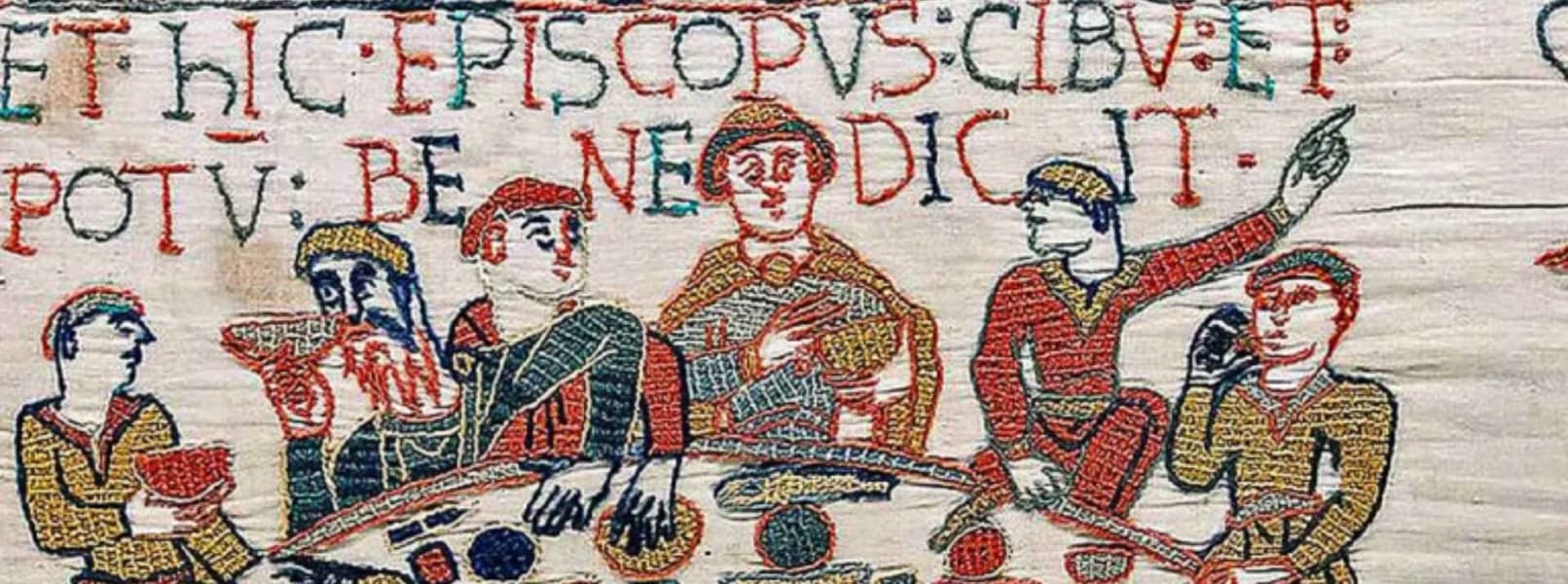
Born in Leamington Spa, Warwickshire, Howard Brian Clarke was educated at the University of Birmingham, where he was awarded the Kendrick Prize in History (1959–60) and graduated with a B.A. in 1962. A bursary from the University of Aix-Marseille (1964–65) drew him to Provence, where his early research into the medieval municipal administration of Draguignan earned him the town's civic medal — an honour conferred again in 1994. He completed his doctorate at Birmingham in 1978, having already taken up a Research Fellowship in Medieval History there (1965–68). In 1968 Clarke joined the Department of Medieval History at University College Dublin, beginning an association with UCD that has now extended over half a century. He rose through the ranks from Assistant Lecturer (1968–75) to College Lecturer (1975–90), Senior Lecturer (1990–2003) and Associate Professor (2003–5), before becoming Emeritus Professor of Medieval Socio-Economic History in 2005. The geographical and chronological range of his scholarship is exceptional: from Domesday England and the Norman world to the Viking Age, from the monastic landscape of early medieval Ireland to the mercantile fabric of continental towns, his work covers the full span of the Middle Ages across the British Isles and Europe. He has also published on the Bayeux Tapestry, medieval science and technology, and translated scholarly works from both French and German. His most enduring institutional achievement is the Irish Historic Towns Atlas (IHTA), which he co-founded as Joint Editor in 1990 and has guided through thirty-two published fascicles and two comparative Maps and Texts volumes, serving successively as Joint Editor (1990–2024), Board Chair (2009–16) — under whose chairmanship the project produced its first digital atlas and inaugurated a series dedicated to Dublin's suburbs — and Consultant Editor (2024 to present). As Ireland's representative on the International Commission for the History of Towns (2007–17), whose remit spans nineteen European countries, he co-edited the seminal Lords and Towns in Medieval Europe: the European Historic Towns Atlas Project (Ashgate, 2015), placing Irish urban history within the broadest European scholarly conversation. He remains an honorary member of the Commission. Beyond the university and the Academy, Clarke was a founder member and later Chair of the Friends of Medieval Dublin (1986–98), Director of the Medieval Trust — the parent body of the visitor centre Dublinia — from 1991 to 2023, and Chair of the Dublin Excavations Publications Project at the National Museum of Ireland (2010–15). His work has reached a genuinely public audience: Dublinia, which opened in 1993 under his directorship, was awarded the Best Smaller Museum Award by the Gulbenkian Foundation, the Heritage Council and the Northern Ireland Museums Council in 2001, and has since been visited by tens of thousands from across the world. In 2009 his peers honoured him with a festschrift — Dublin in the Medieval World: Studies in Honour of Howard B. Clarke (xxxi + 584 pp.) — gathering contributions from leading medievalists across Europe. His most recent work, The Cartularies of Evesham Abbey, is forthcoming in 2026.