
THE OTIUM PRECEPTORSHIP
Since Aristotle, preceptors elevate minds to the summits. Otium continues the path.
I.— LEGACY
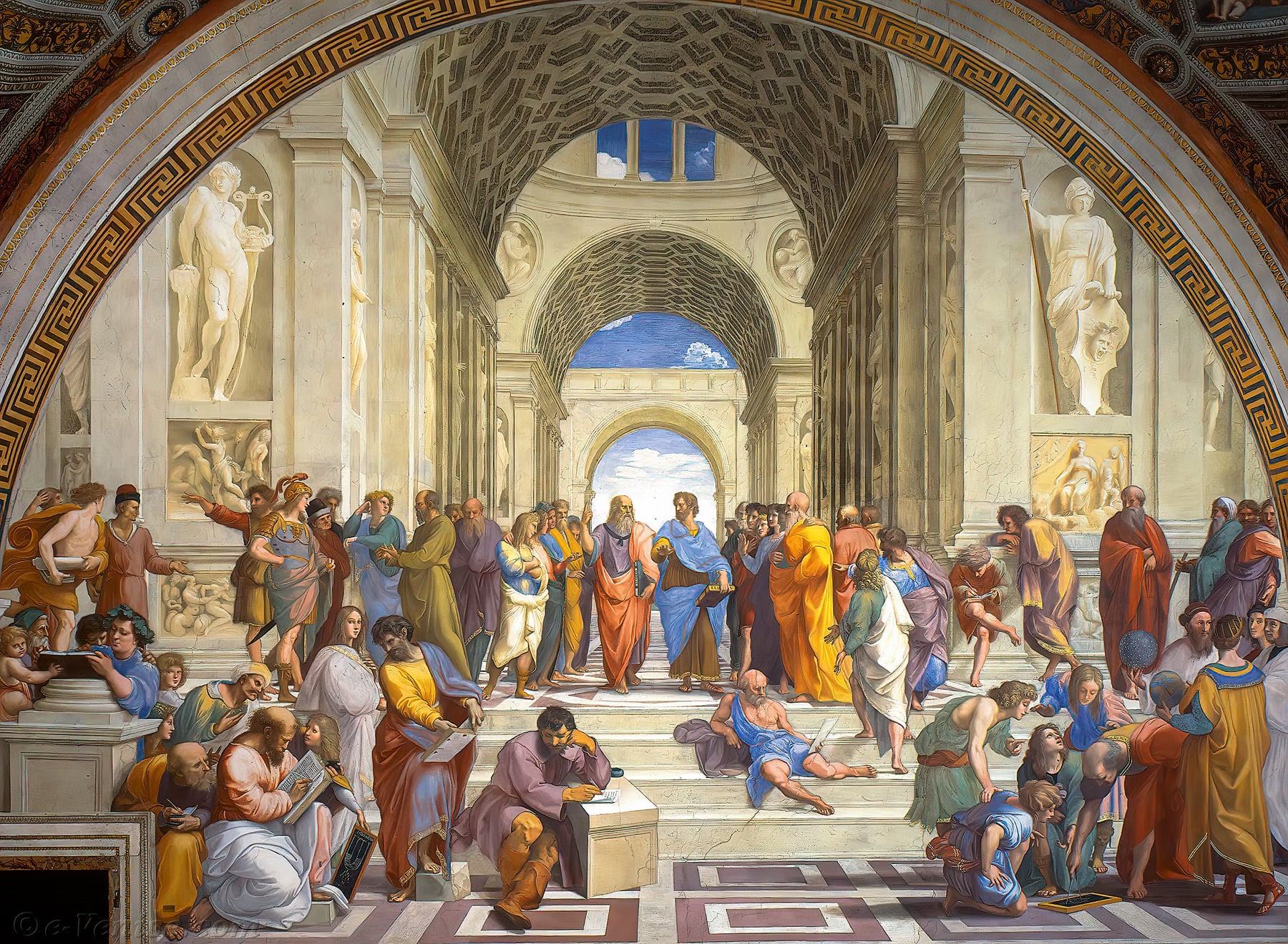
Preceptorship traces its lineage back to the intellectual cradle of the Greco-Roman world — where the bond between master and disciple shaped not only the pursuit of knowledge, but the very possibility of inner ascent. As a tutelary figure, the preceptor embodied the art of transmission.
ɸ In Athens, Aristotle, preceptor of Alexander, did not merely teach a corpus of knowledge, he forged a destiny;
ɸ in Rome, the rhetor prepared men to hold their rank in the city, through speech, ethics and style.
At OTIUM, preceptorship is built on two cardinal pillars:
ɸ I. — Excellence — Academic, intellectual or professional.
ɸ II. — Freedom — Each Praeceptor dispenses their Knowledge sovereignly.
II.— PRIVILEGES
To embody this exacting vocation, Privileges are conferred upon Praeceptor:
ɸ Freedom of transmission
Each Praeceptor determines their editorial line and the conditions of access to their teachings, in complete Freedom, whether freely or with remuneration.
ɸ Editorial sanctuary
An Academy fashioned in your image, a setting for your Lectio and Adventus.
ɸ Exigence of excellence
Your teachings address a cultivated, demanding and engaged audience.
ɸ Support and assistance
Otium Scriptorium orchestrates with you the formatting of your teachings.
III.— ENTRY
Preceptorship demands more than knowledge. It requires an interior disposition; a fidelity to one's own haughty murmurs. To engage in it is to pursue the path of one's own ascension. It is to recognize, through accomplished wandering, a frequentation of the high summits to extract one's singularity.
A. — Selection
α. Eligibility
The role of Praeceptor is open to those whose journey testifies to excellence in transmission, reflection or intellectual direction — professors, lecturers, agrégés or researchers.
β. File
The application file consists of the following elements, to be attached to your submission:
ɸ α. a curriculum vitae;
ɸ β. three recent publications — if applicable — freely chosen;
ɸ γ. the envisaged theme for your first Lectio, accompanied by a brief description; as well as
ɸ δ. a tutelary figure or a quotation that accompanies you.
B. — Designation
Each application is considered with singular attention. This stage aims to discern an affinity between the House and the one who engages with it. The stages are as follows:
ɸ α. submission of the application file;
ɸ β. confidential reading by the OTIUM Editorial Committee;
ɸ γ. if applicable, a dialogue with one of the Committee members may be proposed; and finally
ɸ δ. in case of designation: delivery of a unique access code granting the right to found your own Academy.
IV. — OF PRINCIPLES
A few principles for understanding admission, intellectual freedom, the protection of works and the conditions of transmission on OTIUM.